A bright balcony is not necessarily a sunny planting site. Before choosing crops, find out where direct sunlight actually lands, how long it stays, and what blocks it. A short record of your own space is more useful than a label such as “south-facing” on its own.
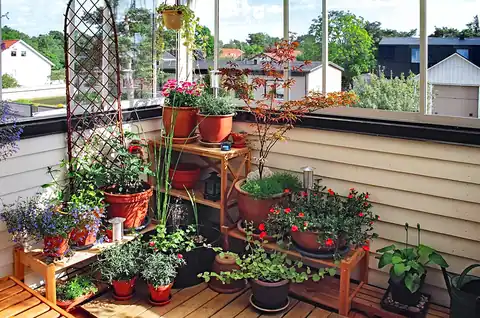
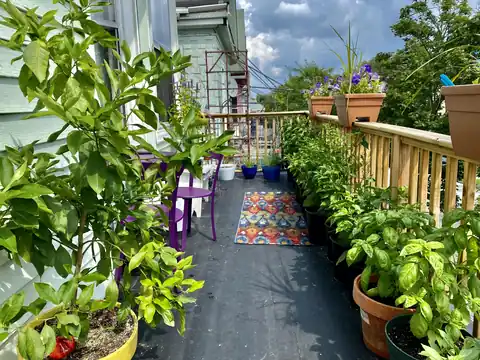
Start a small garden layout with the space you need to use every day. Mark the door, your route through it, and the places you must reach before deciding where the pots belong. A garden that makes watering, sitting down, or carrying groceries awkward needs a different arrangement.
Choose the routine before choosing the crop. A container garden needs someone to notice changing conditions, supply water, and deal with growth. Begin with the care you can reliably provide during a busy week, including a hot spell, rather than the time you hope to have on an ideal weekend.
Wind creates two different planning problems: a plant can dry out or suffer damage, and garden objects can become unsafe. Horticultural advice can help with the first problem. It cannot establish the structural capacity of your balcony or certify that an attachment, screen, or container will remain secure in a storm.
A small freestanding garden is easier to reconsider than a collection of fixed planters. Before buying anything, check what your agreement and building rules permit, where drainage can go, and how you will remove the garden later. “No drilling” does not automatically mean permitted, harmless, or easy to move.
 Indiiramma Garden