 Indiiramma Garden
Plan a Container Garden You Can Still Walk Through
Start a small garden layout with the space you need to use every day. Mark the door, your route through it, and the places you must reach before deciding where the pots belong. A garden that makes watering, sitting down, or carrying groceries awkward needs a different arrangement.
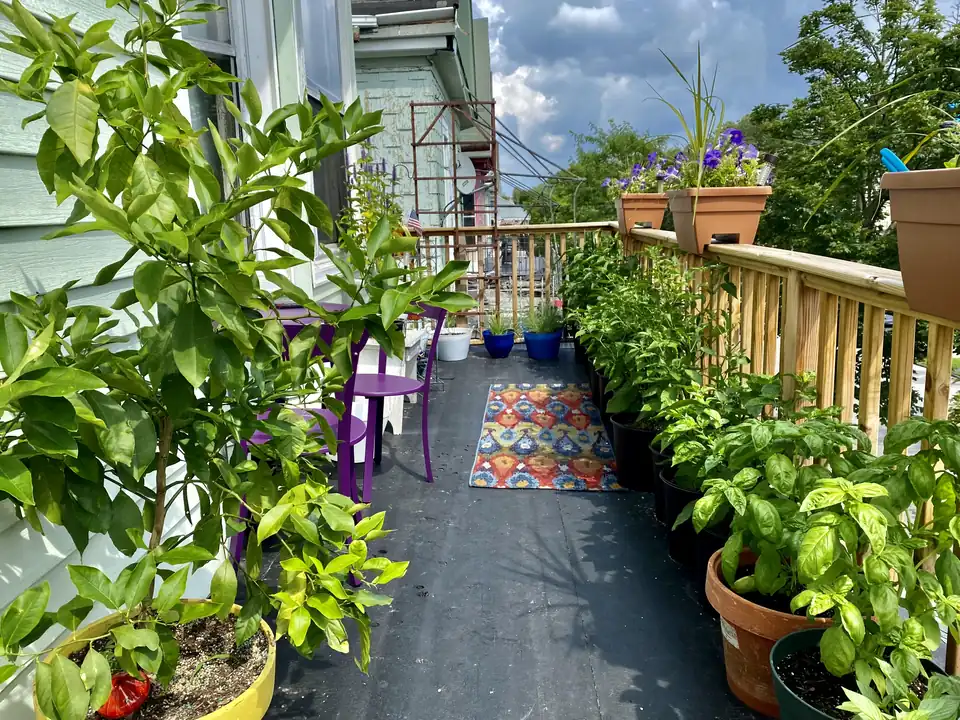
Draw the ordinary movements first
Make a simple sketch of the space. Show door swings, fixed furniture, drains, and any access that building rules require you to keep clear. Include the route you use while carrying a full watering can. This is a practical layout sketch, not a building-code or accessibility assessment; obtain the relevant requirements for your property rather than borrowing a universal walkway dimension.
Now mark possible container locations around those movements. Look for a place where you can reach the growing medium without leaning across a railing or stretching over another pot. If an arrangement depends on shifting heavy containers every day, try a smaller garden instead.
Allow room for the grown plant
A nursery pot shows the starting size, not the final footprint. University of New Hampshire Extension advises planning for mature plant shape and size. Read the plant's growth information and allow for spreading leaves, stems, and any support it will need.
Draw that expected canopy around the pot on your sketch. Two containers may fit side by side while their mature plants compete for the same space. Leave enough access to inspect the back of the plants, remove damaged growth, and harvest without constantly moving their neighbors.
Trial the arrangement before filling
Set out empty containers or temporary markers. Open the door fully. Move through the space with the items you normally carry. Sit in the chair, reach the drain, and test where you would put a watering can down. Change the layout while it is easy to change.
Consider what will happen to draining water. It should not create a slippery route or run onto someone else's space. A saucer can collect runoff, but it also adds a task: standing water must be managed appropriately for the container system. Surface protection does not establish that a floor can carry the filled garden.
Give the layout an exit plan
Colorado State University Extension notes that filled, wet containers can be difficult to lift. Decide how you will remove a plant, empty a pot, or deal with a broken container before planting. Do not assume a container described as portable will be easy for you to move once filled.
Finish with a small number of reachable pots and a clear everyday route. Add another container only when the existing layout has worked through normal care and growth.
Sources and scope
- University of New Hampshire Extension, Growing Vegetables in Containers.
- Colorado State University Extension, Container Gardens.
- University of Maryland Extension, Growing Vegetables in Containers and Salad Tables.
Layout exercises are editorial suggestions. This article does not assess structural capacity, legal access widths, or an individual person's mobility needs.