 Indiiramma Garden
Support a Container Climber Before It Flops
Choose a support for the plant's mature habit and install it while access is easy. A tall trellis is useful only when the container and its placement can remain stable.
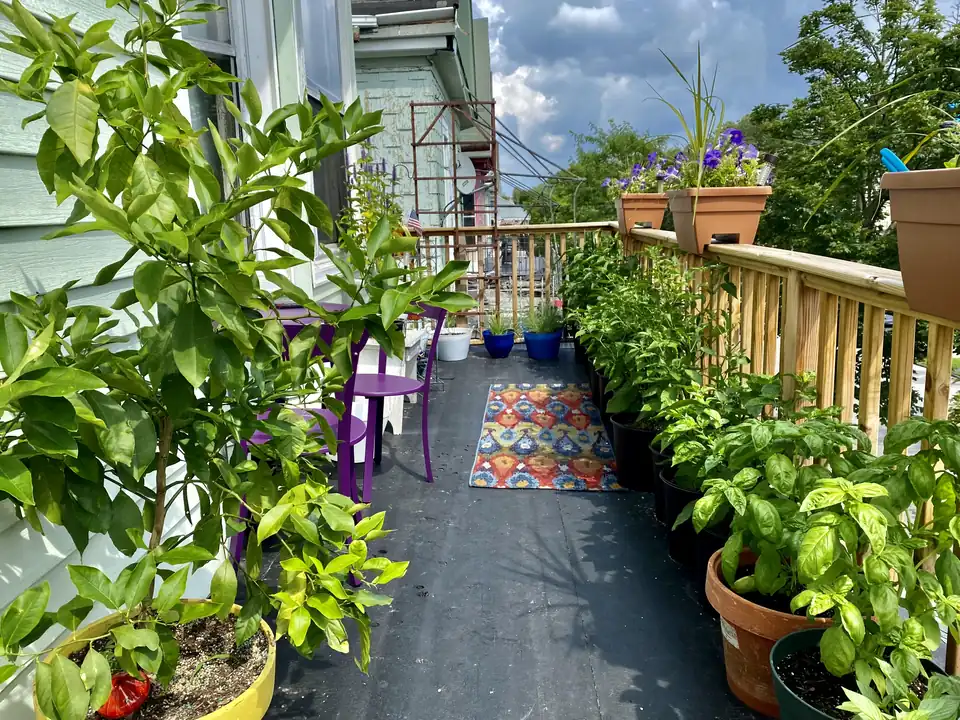
Match the plant to the structure
Read the cultivar description before buying a trellis. A pole bean and a bush bean do not use space in the same way; a compact cucumber and a long vine also create different canopies. Choose a support the plant can use and a height you can reach for routine care and harvest.
For a small container garden, access matters as much as apparent growing area. Leave space to reach the potting mix, inspect leaves, and take fruit without leaning beyond a balcony edge. A trellis that blocks a door or turns every watering into a lifting task is not a good fit.
Install before the root zone is crowded
University of Maryland Extension advises installing supports when plants are young. Arrange stakes or the trellis as you plant, rather than driving a sharp support blindly through a mature root ball. Check that the container has enough depth and width for the selected system.
A support and its growing plant also change the container's balance. Test the empty arrangement in its intended position, then review it as the canopy develops. Do not treat a light pot with a large sail of leaves as stable merely because it stood upright on a calm planting day.
Guide growth without tightening a noose
Where a stem needs tying, use a suitable soft plant tie with room for growth. Attach the stem gently rather than pulling a fallen shoot sharply upward. Check ties regularly as stems thicken, and reposition them before they rub or constrict tissue. Not every tendril or shoot needs to be forced onto a predetermined line.
Keep fruit weight in mind as well as leaf height. A support suitable for a young vine may not suit a mature crop. If the arrangement cannot hold the intended plant safely, reconsider the crop or support rather than adding improvised connections to a building.
Keep balcony attachments a separate decision
A plant-care guide cannot certify a railing, wall fixing, roof, or balcony load capacity. Follow the property rules and obtain appropriate advice for any structural connection. Keep freestanding containers away from unprotected edges. After strong weather, inspect position and ties before assuming the setup is unchanged.
Sources and scope
- University of Maryland Extension, Growing Vegetables in Containers and Salad Tables.
- University of Maryland Extension, Planting Vegetables in Containers.