 Indiiramma Garden
Choose a Tomato That Fits the Container and Support
The most useful words on a tomato label may describe the plant rather than the fruit. A photograph of a small cherry tomato does not tell you that its vine will be small. Before purchasing, find the cultivar's growth habit and expected mature size.
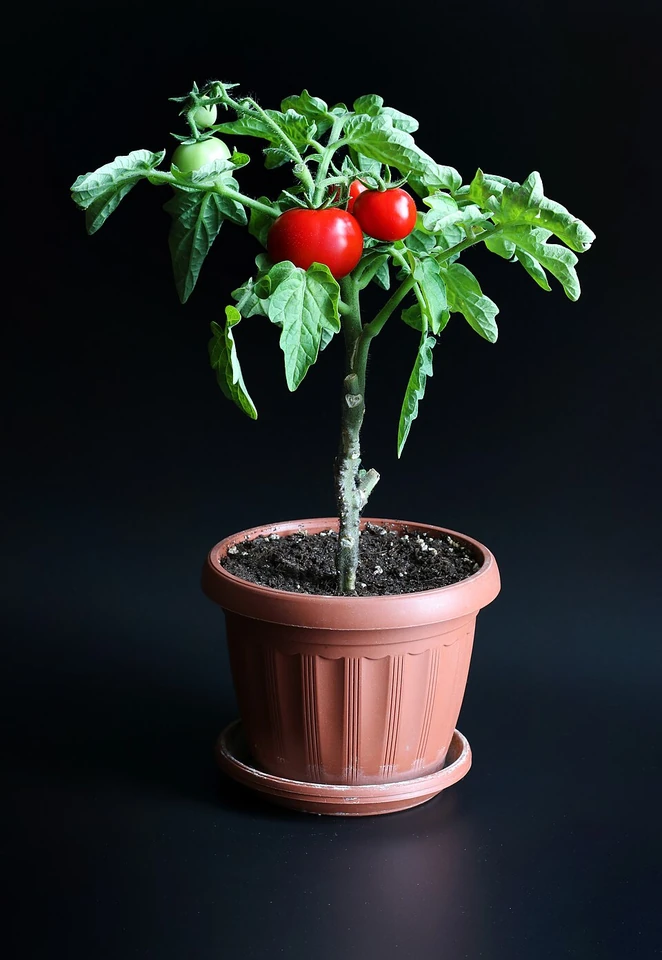
University of Minnesota Extension distinguishes determinate bush types from indeterminate vines that continue extending and need support. It recommends installing supports when planting. Minnesota tomato guide
Read four pieces of information
First, record the cultivar name so that you can find a detailed description beyond the retail tag. Second, check whether it is determinate, indeterminate, or specifically described as a dwarf or patio selection. Third, look for mature height and spread. Finally, establish what the stated days to maturity counts from; a transplant estimate is not a clock starting when you sow seed.
Use those details to draw the finished setup. Include the container, foliage, support, and access to fruit. A compact plant may still occupy more room than its nursery pot suggests. If the description is incomplete, ask the supplier before buying the support and assuming it will fit.
Harvest pattern matters too. Consider whether you want a concentrated crop or a longer series of pickings. Growth habit helps frame that choice, but cultivar and growing conditions still affect the outcome. Do not turn a habit description into a promised harvest date.
Choose the container and support together
Compare actual internal depth and usable volume with guidance for the selected cultivar. Avoid filling the space around a small transplant with additional tomato plants merely because the container looks empty at first.
Position any required cage, stake, or trellis before the roots and shoots occupy the space. Check whether the plant can be watered and inspected with the support installed. Think through how you will reach the far side without leaning beyond a balcony or shifting a heavy planted container.
For determinate plants, check the cultivar's specific support needs; do not assume the word “bush” settles every practical stability question. For an indeterminate plant, a short decorative stake should not be treated as adequate simply because it supports the young stem today.
Plant for the local season
Tomatoes need a suitable warm, frost-free growing period. Choose a plant you can accommodate through that period rather than one that is already large but has an uncertain history. Introduce protected plants gradually to outdoor conditions, using local advice for timing.
Once planted, keep the label and note the container and support used. Check ties and access as growth develops. If fruiting disappoints, review light, temperature, care, and cultivar before assuming a particular fertilizer will fix it.
The Minnesota guide provides growth-habit and seasonal context, not a container yield trial. It cannot certify a balcony attachment or guarantee fruit from a pot of a stated size. No structural rating, pruning rule for every cultivar, or fertilizer dose is established here.