 Indiiramma Garden
Protect Tender Pots When Cold Weather Arrives
Use the forecast and the plant's cold sensitivity to decide which pots need moving or covering. A sheltered wall and a thin cover are not substitutes for suitable temperatures.
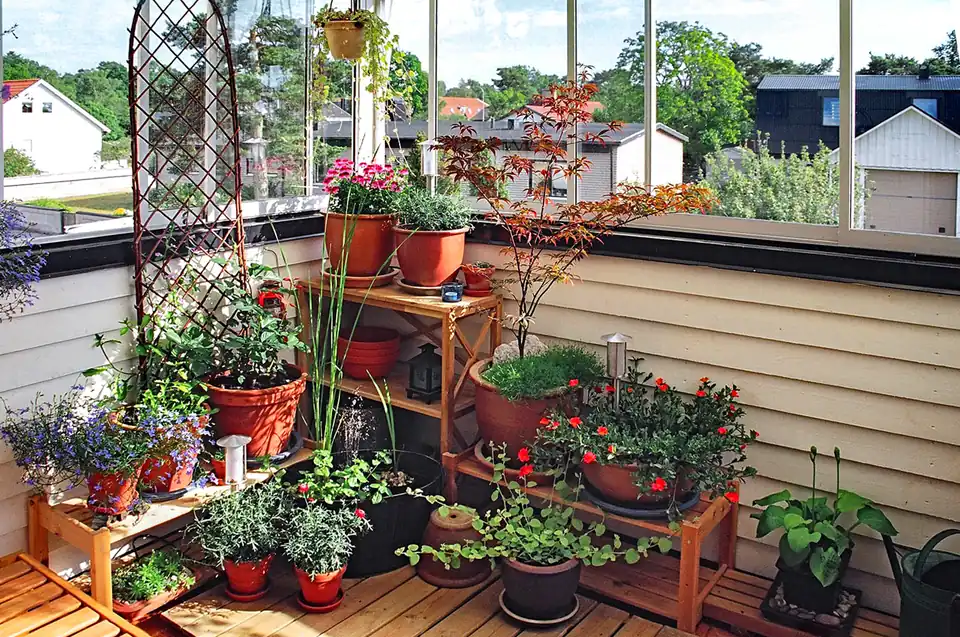
Sort by what the plants can tolerate
Identify tender plants before a cold night is imminent. Record the crop or species and the protection it needs; a dormant hardy perennial and a tropical foliage plant do not belong in one group labeled outdoor pots. Use local extension guidance where the plant's tolerance is uncertain.
Check the actual forecast for the garden location and its exposed conditions. A calendar month gives little useful protection across different climates. Prepare a moveable group first so the practical task is not delayed until darkness, rain, or icy steps make handling difficult.
Move the most vulnerable containers
For plants that need a warmer protected space, choose somewhere that meets their temperature needs. A garage may prevent exposure in one climate while still becoming too cold in another. Temporary protection is also different from a suitable long-term growing location with appropriate light.
Lift only what you can handle safely, and protect indoor surfaces from drainage. Do not place foliage against heaters or trap it in a draft beside an opening door. Check for pests before introducing outdoor pots into an indoor collection.
Use covers with realistic expectations
University of Florida IFAS Extension explains that covers help more with frost than with extreme cold. For pots left outside, grouping containers and protecting their sides can reduce exposure. Use suitable plant protection material, support it away from foliage where needed, and secure it without crushing growth.
A cover is not a guaranteed temperature increase. Arrange it so it can be removed or ventilated as conditions improve; trapped daytime heat can create a different problem. An exposed balcony also lacks some of the ground heat available in landscape examples, so do not assume a copied ground-cover method provides identical protection.
Check again after the cold period
Review the next night's forecast before returning pots to their original positions. Check moisture as well as leaf damage, and keep the root zone from being left waterlogged. Photograph uncertain damage and follow the plant's subsequent condition before concluding it has died. Repeated cold spells may require a longer-term growing decision, not a succession of improvised overnight covers.
Sources and scope
- University of Florida IFAS Extension, Okaloosa County, Cold Protection of Landscape Plants.