 Indiiramma Garden
Give Rosemary Light and a Freely Draining Root Zone
A rosemary plant can struggle in a damp pot even when its foliage looks dry. Before adding water, examine the growing media, the outlet, and the light available to the plant. Repeating one response to every symptom can make the original problem harder to understand.
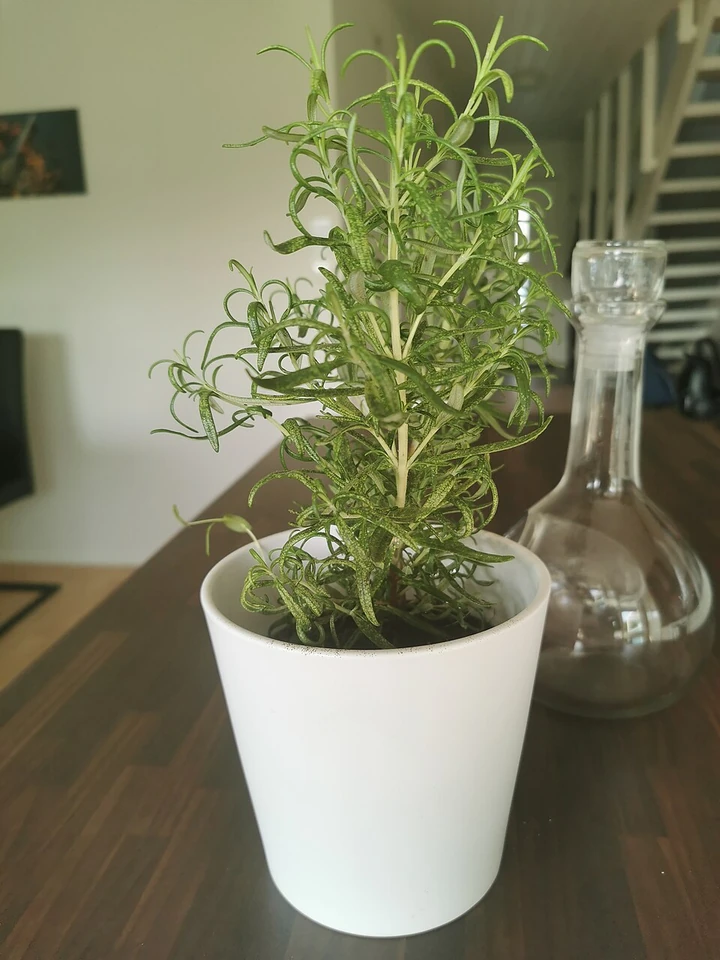
Rosemary, Salvia rosmarinus, also appears under its older name Rosmarinus officinalis. NC State describes it as a sun-loving shrub that needs well-drained conditions and has difficulty with wet, humid environments. Indoor overwintering can be challenging. NC State rosemary profile
Review what changed
Did the plant recently move indoors? Was it transferred into a larger pot, placed inside a decorative cover, or watered on the same day as other herbs? Write down the sequence before changing anything else. Several small changes at once can obscure the useful clues.
Inspect where water can leave the container. If an inner pot sits inside a cover, check the space below it. Examine the media below the surface rather than judging only by dry needles or a pale top layer. A damp root ball and a dry-looking plant can occur together; the appearance alone does not establish the cause.
Do not add gravel as a repair for an unsuitable root environment. If the media or container needs changing, plan an appropriate repotting operation around the root condition and plant size.
Assess the light at its new position
An outdoor rosemary moved to a window has entered a different growing environment. Record the direct light that actually reaches it and any nearby heat source or obstruction. Iowa State Extension identifies light as a major limitation for indoor herbs and notes that rosemary can be more demanding than several common choices. Iowa State indoor herb guide
Avoid answering weak indoor growth with fertilizer before resolving the conditions. Equally, do not move a plant abruptly into harsh outdoor exposure as an emergency experiment. Plan changes so that the plant can adjust and you can observe the result.
Make a winter decision before winter arrives
Check the cultivar and local winter advice before assuming rosemary can stay outside. A perennial label does not guarantee survival in an exposed container. Work out whether you have a suitable protected location and enough light before the weather forces a rushed move.
Continue observing rather than declaring a fixed weekly water allowance. A different pot, exposure, season, or root system changes the practical routine. Record moisture observations and the response of new growth after a correction.
If decline continues, provide the plant's identity, care history, and root/media observations to a local extension service. Browning can have several causes. These sources support examining light and wet-root conditions; they do not establish a diagnosis from one image, a winter-hardiness guarantee, or a rescue treatment for every damaged rosemary.