 Indiiramma Garden
Inspect New Growth for Aphids Before Damage Spreads
Turn a shoot gently and look beneath its youngest leaves when checking a container plant. Aphids often gather where tender growth is developing, so a quick glance at older outer foliage can miss them. Find the insects before choosing a response.
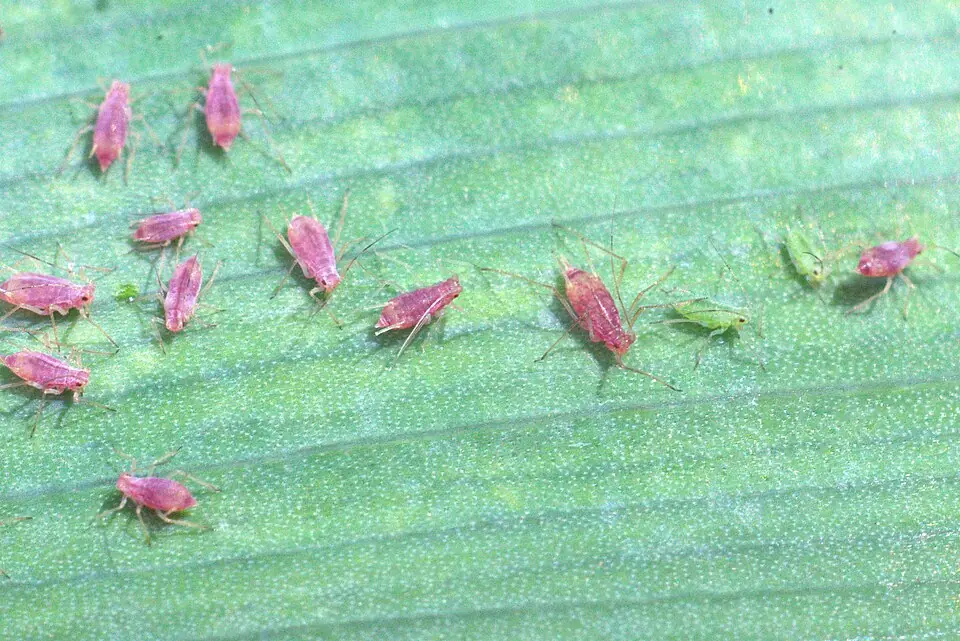
University of Minnesota Extension describes aphids as small, soft-bodied insects of several colors, with paired structures called cornicles near the back of the body. It also notes that many infestations do little damage and can be managed without insecticide. Minnesota aphid guide
Look for bodies and a pattern
Examine growing tips, unopened buds, and leaf undersides. Use magnification if necessary. Record whether you see live insects, pale shed skins, sticky material, or distorted growth. These observations belong together; sticky leaves alone can have another explanation.
Take a photograph showing the insects and their location, not just the damaged leaf. If identification remains uncertain, seek help before treating. A moving green speck is not automatically an aphid, and every insect near a colony is not necessarily feeding on the plant.
Check neighboring containers and any recently introduced plants. Indoors, separate a confirmed affected plant where practical while maintaining its appropriate light and care. Make sure the new location does not merely create a second neglected plant problem.
Choose the least disruptive useful response
Assess the amount of damage and whether the population is increasing. On an outdoor plant, look for natural enemies before applying anything. Minnesota's guidance describes predators and parasitoids that help reduce aphids; broad indiscriminate treatment can interfere with that help.
Where the plant tolerates it, a controlled spray of plain water can dislodge aphids. Support delicate shoots and manage the runoff. A hose setting suitable for a woody landscape plant may damage a young herb, so choose a method the actual plant can withstand.
Reinspect rather than assuming one wash has completed the job. Note whether fresh growth is being colonized and whether damage continues. Do not repeatedly strip a small plant of most of its leaves simply because a colony is easier to remove that way.
Escalate only with an identified purpose
If further treatment is warranted, confirm that the product is labeled for the pest, crop, and environment. An indoor ornamental and an edible balcony crop are different uses. Follow all directions, including any harvest restrictions; a household detergent recipe is not a substitute for a labeled insecticidal product.
Persistent curling after insects are gone is not by itself evidence that treatment failed. Keep monitoring live populations and new growth, and seek diagnosis if other symptoms continue. Aphids can be associated with several kinds of injury, but their presence does not prove a specific plant virus.
The Minnesota source provides identification and integrated management principles. Its landscape examples do not prescribe a spray program for every small container. No pesticide dose, universal treatment threshold, or guarantee that a photograph establishes species is offered here.