 Indiiramma Garden
Grow Radishes with Enough Root Room and Timely Harvest
Radishes can produce an impressive patch of leaves while the part you intended to harvest remains disappointing. Before blaming the seed, check what type you planted, how much space it received, and whether you inspected it at the right stage.
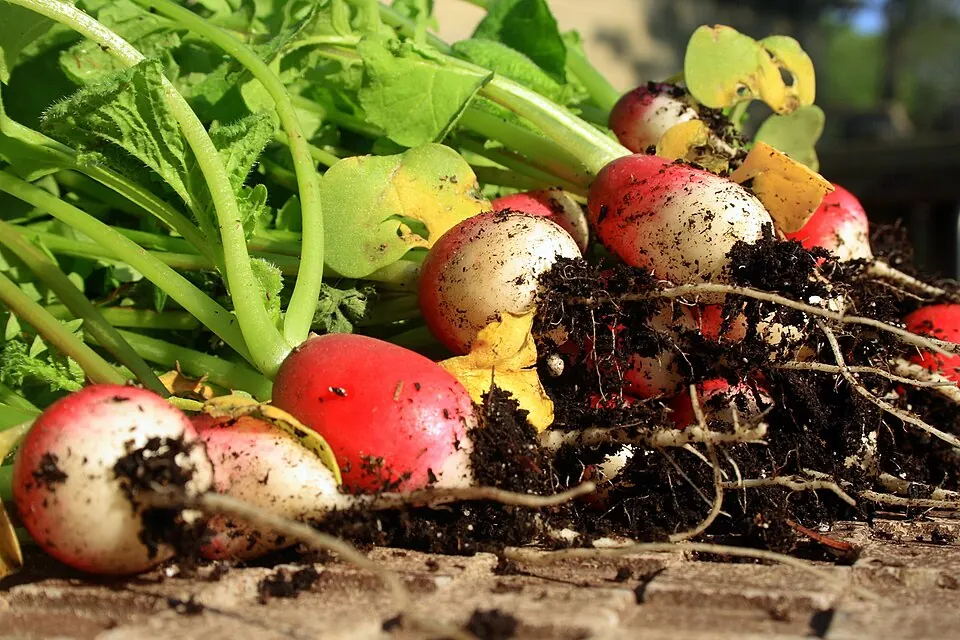
University of Minnesota Extension distinguishes small garden radishes from longer daikon types. It describes radishes as cool-condition crops and notes that stress and heat can reduce eating quality. Its spacing and harvest guidance varies with type. Minnesota radish guide
Choose a root that fits the pot
Read the cultivar description before choosing depth. A short round radish and a long root should not be assigned the same container simply because both packets say radish. Compare the usable depth inside the pot, not its outside height or the space beneath a reservoir insert.
Use suitable container media with drainage. Keep the packet so that the sowing depth, finished spacing, and maturity estimate remain available. Plant directly into the intended container when the chosen type's instructions call for direct sowing, and label the date.
Sow with room to thin. A dense line of seedlings is a task to complete, not a successful finished planting. Use the packet's spacing for that variety and intended harvest size; long or large types need their own allowance.
Check more than the leaf canopy
After emergence, compare actual spacing with the plan. Do not leave close neighbors crowded together because removing them feels wasteful. Identify which seedlings to retain while they are still small, taking care not to disturb the chosen plants.
Check moisture in the root media throughout growth. A small container can experience conditions different from an in-ground bed nearby. Avoid swinging between neglect and repeated flooding in an attempt to catch up.
Review light and local temperatures if root development is poor. A photograph of healthy-looking leaves cannot establish a single explanation. Container depth, crowding, cultivar, weather, and crop age are all useful information to provide when asking for help.
Put inspection before the packet's final date
Use the listed maturity period as a prompt to begin checking, not permission to forget the crop until a particular morning. Examine a representative plant when it approaches the expected harvest stage. If necessary, lift one to see what is happening beneath the leaves.
Decide what to do with the remaining planting from that observation. Do not leave every root indefinitely in the pot hoping it will improve. If the crop has become unsuitable, record the conditions and choose a better local window for another small sowing.
Minnesota's planting months and quick garden-radish examples are regional and type-specific. They are not a promise for daikon or every container. No fixed worldwide harvest day, diagnosis from leaf growth, or fertilizer prescription is offered here. The practical goal is to match root shape, spacing, growing conditions, and harvest attention before repeating the crop.