 Indiiramma Garden
Rotate Window Plants for Balanced Growth
Turning a pot can distribute one-sided window light more evenly. It cannot supply the extra light a dim room lacks, and it will not necessarily straighten growth that has already become woody.
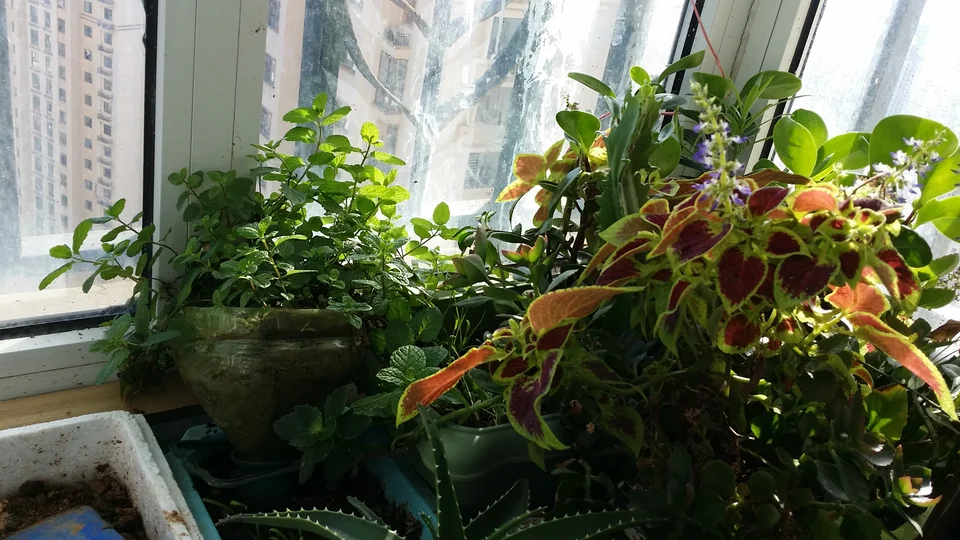
Separate direction from quantity
Look at where the newest growth is heading and where the usable light enters. A leafy plant beside one window may grow toward that source. A slow, long-stemmed plant far inside the room may also be receiving too little light overall. These are related questions, but they require different decisions.
University of Minnesota Extension identifies elongated stems and long gaps between leaves among signs associated with insufficient light. Those signs are a reason to review the growing conditions, not a diagnosis based on one photograph. Check the plant's light requirement before choosing either rotation or a new location.
Turn the container gently
For an upright foliage plant suited to routine rotation, turn the pot by a modest amount so a different side faces the window. A small mark on the pot can help you keep track of its position. Lift or slide the container safely without twisting the stem, snagging support ties, or dragging leaves against the glass.
Judge the effect in subsequent growth. A measured photograph from the same position can show whether the canopy is developing more evenly, but it is not an experiment proving a particular turning schedule. Different growth habits, flowering states, and plant requirements may call for different handling.
Change the light supply when that is the issue
If all sides are stretching in a dim position, repeated turning simply rearranges access to an inadequate source. Consider a more appropriate location or correctly chosen supplemental lighting. Introduce a brighter position gradually; immediately placing shade-acclimated foliage into strong direct sun can create another problem.
Keep window clearance, drafts, and heat in view as well. The best position is not automatically the closest possible contact with glass. Review new shoots after the adjustment instead of bending old stems into a shape they cannot comfortably hold. Rotation is a way to manage direction within a suitable growing environment, not a substitute for creating that environment.
Sources and scope
- University of Minnesota Extension, Lighting for indoor plants and starting seeds.
- University of Maine Cooperative Extension, Maine Home Garden News - November: Greening Your Houseplant Thumb.