 Indiiramma Garden
Start Microgreens with Clean Equipment and Appropriate Seed
Begin a first microgreen project with one small tray and one identified edible crop. That makes the seed instructions, growth stage, and daily checks easier to follow than a mixture of seedlings developing at different rates.
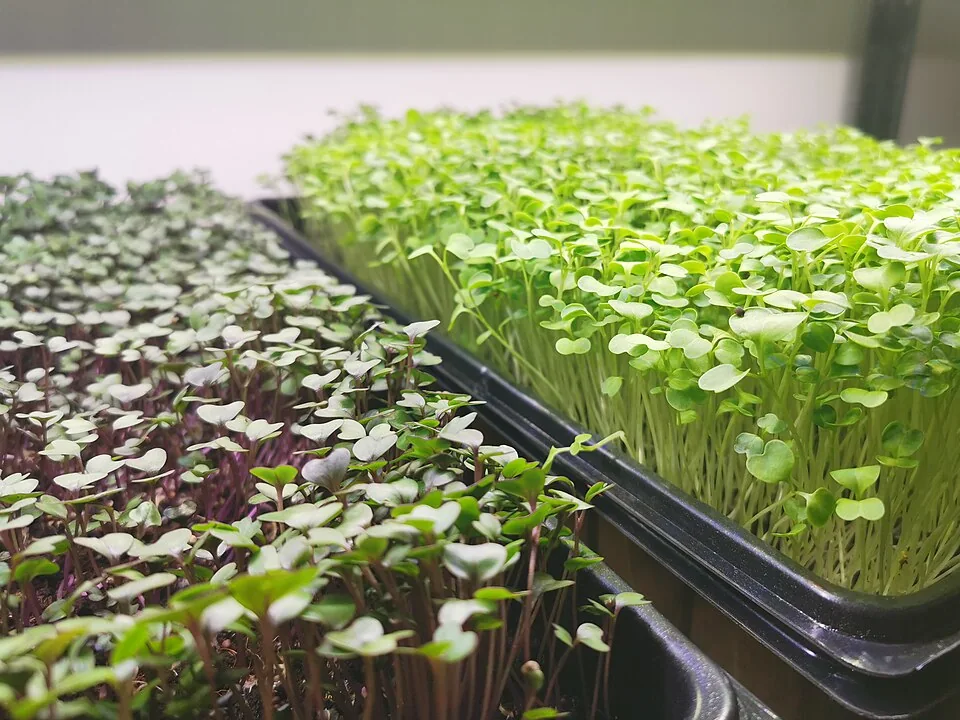
This is a tray crop harvested by cutting the young shoots above the growing material. It is not an instruction for producing sprouts in a jar or eating an entire germinated seed with its root. Keep the growing and harvesting method clear when buying seed or asking for advice.
Choose supplies for food growing
South Dakota State University Extension recommends untreated seed, new or sanitized containers, clean cutting tools, and handwashing before planting and harvesting. Untreated describes the absence of certain seed treatments; it does not establish that seed is free of human pathogens. SDSU home microgreen guide
Buy seed identified for the edible microgreen crop you intend to grow. Keep the package and lot information. Do not substitute unidentified ornamental seed, chemically treated garden seed, or an unknown seed mixture.
Prepare a clean work surface and a food-appropriate tray with the drainage arrangement required by your method. Use an appropriate growing substrate from a reliable supplier. Keep pets, dirty tools, and unrelated potting work away from the tray and harvested greens.
If equipment is reused, clean it and use a sanitation method suitable for its food-growing application. Follow the relevant product directions; do not improvise a bleach mixture or assume that rinsing visibly dirty equipment has sanitized it.
Sow and observe a single crop
Moisten the substrate and follow the seed supplier's crop-specific sowing and covering instructions. Record the date. Do not transfer spacing or thinning instructions for plants grown to maturity to this short-cycle tray crop; use the instructions for your particular microgreen species and method. Use only any soaking step appropriate to that seed rather than soaking every species by default.
Provide the recommended light and monitor moisture daily. Water carefully so that media does not splash over the edible shoots, and avoid leaving the tray persistently saturated. University of Maryland Extension explains that tray design and species affect care and recommends separating species with different growth rates. Maryland microgreen guide
Food safety and visible plant health are different checks. Do not taste a questionable tray to decide whether it is acceptable. If contamination, unusual decay, or mold is suspected, keep it out of meals and seek appropriate food-safety advice; washing cannot be assumed to rescue it.
Harvest without bringing the substrate along
Wash your hands and prepare clean scissors and a clean receiving container. Cut at the crop's appropriate young-leaf stage above the growing material, leaving roots and substrate behind. Keep harvested greens away from the used tray and unclean surfaces.
SDSU describes rinsing harvested greens with cool water and refrigerating them. Use potable water and appropriate fresh-produce handling guidance; do not wash produce with household soap or a guessed disinfectant recipe. FDA's fresh-produce cleaning guidance uses plain running water rather than soap or produce wash. Plan a small harvest you can handle promptly rather than relying on a promised storage life.
The sources differ on some feeding and media-reuse practices, so no universal fertilizer or reuse recipe is supplied here. Homegrown, organic, and clean-looking do not mean pathogen-free. This guide is a small home-growing workflow, not a commercial food-safety certification or a guarantee that raw microgreens are suitable for every eater.