 Indiiramma Garden
Grow Parsley Through a Long Leaf Harvest
Parsley is a crop worth labeling when you sow it. Its slower emergence can make an apparently empty container tempting to reuse before the seedlings have had a fair chance. Mark the sowing date, keep the seed packet, and make room for the plant you intend to harvest.
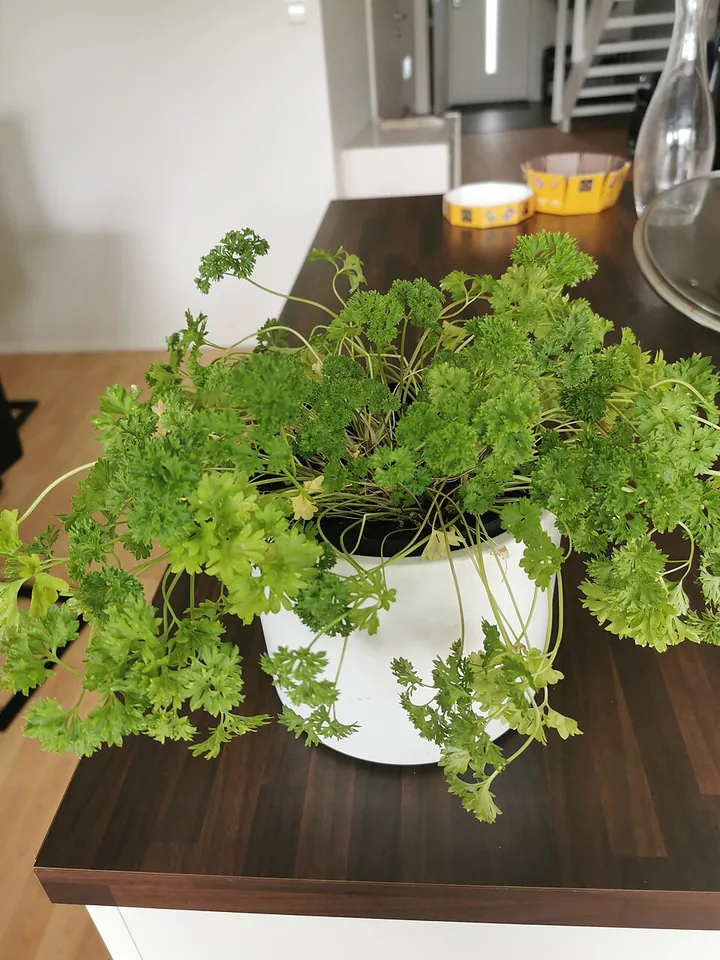
Common culinary parsley, Petroselinum crispum, includes curly and flat-leaf selections. It has a biennial life cycle, although many gardeners grow it for one season of leaves. University of Minnesota Extension describes germination as variable and recommends harvesting the outside stalks near their base. Minnesota parsley guide
Establish a planting you can distinguish
Choose between seed and a labeled transplant according to the time and space you have. A transplant makes it easier to begin with a visible plant; seed gives you a record of the cultivar and sowing conditions from the start.
For seed, use a draining container and suitable media, then follow the packet's sowing depth. Water carefully so the small planting is not washed into a corner. Label the pot before setting it beside other seedlings. Keep the seed zone moist while monitoring drainage; repeated flooding is not a way to hurry emergence.
Check the expected emergence information for that seed lot before starting again. Seed freshness and conditions affect the outcome. The Minnesota source gives a broad germination range, not a deadline that every packet must meet.
Once seedlings can be evaluated, thin according to the cultivar and intended finished spacing. A dense green patch may look successful while still leaving too little space for useful mature plants. For transplants, account for their mature habit when choosing the container rather than grouping several into one small opening.
Harvest stalks, not a flat haircut
Look for the older usable leaves around the outside. Trace each selected stalk toward its base and snip it there, taking care around the center's new growth. This is different from shaving the tops off all the leaf stalks at once.
Take an amount that suits the plant's current growth. If you regularly need more than a small pot can provide, plan another planting instead of repeatedly removing most of the foliage. Keep the center visible so that later harvests remain deliberate.
During those visits, check media moisture and overall growth. Indoors, investigate available light if stalks become weak or stretched. A room that is pleasant for cooking does not necessarily supply sufficient plant light.
Plan the next crop as this one changes
If an older parsley sends up a flower stalk, identify that transition before treating it as a feeding failure. A biennial plant does not remain indefinitely in its first leafy stage. Decide whether your priority is another leaf crop or retaining the flowering plant, then plan space accordingly.
The Minnesota guide supports establishment and outer-stalk harvesting. Its outdoor dates and winter experience are regional, and its garden-bed watering advice is not a container calendar. No germination date, year-round leaf supply, or identical mature size across parsley selections is guaranteed here.